NOW OPEN: Short Abstract Submission and Early-bird Registration
For the best experience, please view the website on a laptop or desktop computer

Dr. Samantha Willden
Assistant Professor of Entomology, Cornell AgriTech, Cornell University, Geneva, New York, USA
Dr. Samantha Willden
Discover insights from our expert keynote speaker
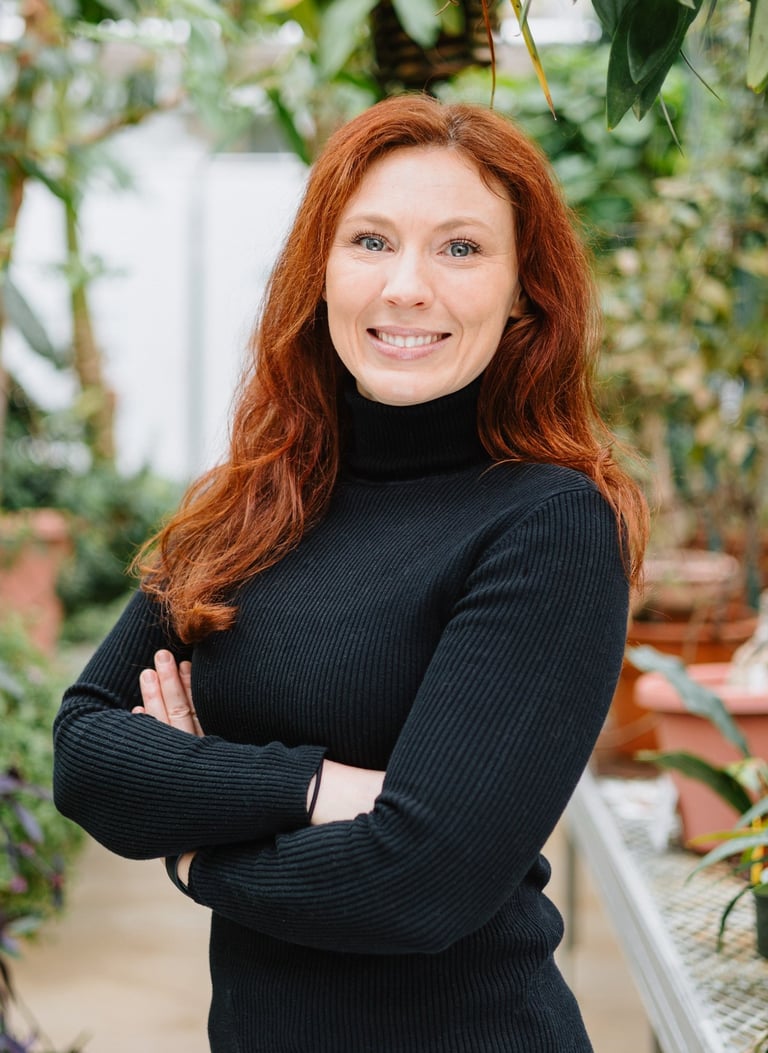
Assistant Professor of Entomology, Cornell University, USA
Samantha “Sam” Willden is an insect ecologist specializing in controlled environment agriculture (CEA). Her work blends foundational ecology and applied systems to identify sustainable and long-term solutions in pest management.
Sam started her academic career at Utah State University where she received an MS in rangeland ecology with Dr. Ted Evans. She developed a phenological model to predict synchrony between plants and insect herbivores and discovered protandry (earlier male emergence compared to females) in an important classical biocontrol species. Sam completed her PhD at Cornell University where she studied insect ecology on strawberries grown under low tunnels with Dr. Greg Loeb. A key achievement was determining how greenhouse plastics modify light environments that shape invertebrate communities and the efficacy of microbial biocontrol. Following her PhD, Sam was a postdoc at Purdue University with Dr. Laura Ingwell where she worked on a large research team focused on identifying landscape, habitat, and seasonal drivers of invertebrate communities in high tunnels. Her most recent work described the performance and profitability of using augmentative biocontrol for aphid management during winter production. Despite the cold and dark conditions, she found that biocontrol agents can prevent aphid outbreaks and need for pesticide intervention.
Sam joined Cornell University in November 2024 as an Assistant Professor to build a research and extension program centered on addressing short- and long-term pest management needs of the CEA industry in New York. Her work spans simple tunnels to high-tech greenhouses and is centered on describing how abiotic and biotic factors drive invertebrate communities. She comes with experience in tritrophic interactions (plant-pest-natural enemies) and is very excited to explore how novel technologies in CEA, such as lighting, automation, and growing media, mediate these relationships.
Keynote Lecture:
Microclimates in Greenhouse IPM: Linking Abiotic Variation to Biocontrol Efficacy
Controlled environment agriculture provides a unique opportunity to design ecosystems that optimize plant productivity. While abiotic factors such as light intensity, temperature, and relative humidity can be tightly regulated, microclimatic variation within greenhouse crops can still shape pest distribution and impact the performance of macro- and micro-biocontrol agents. This talk will present research from the Willden Lab on microclimate variation in high-wire tomato systems and its effects on biocontrol efficacy. Lastly, this talk will discuss how incorporating abiotic drivers into IPM can improve management outcomes.




Event
Join us for Biological Control Innovations and Networking, a gathering of ideas, research, and collaboration.
Secretariat
Email: iobc-greenhouse-wgm2026@wur.nl
Phone: +31 317 488 169
© ICPC2026. All rights reserved.
Business Unit Greenhouse Horticulture & Flower Bulbs, Wageningen University & Research
Venue
Flora Boskoop
Parklaan 4, 2771 GB, Boskoop, The Netherlands
31 August - 3 September 2026
Timings: 9:00 to 18:00
© Raghavendra Reddy Manda